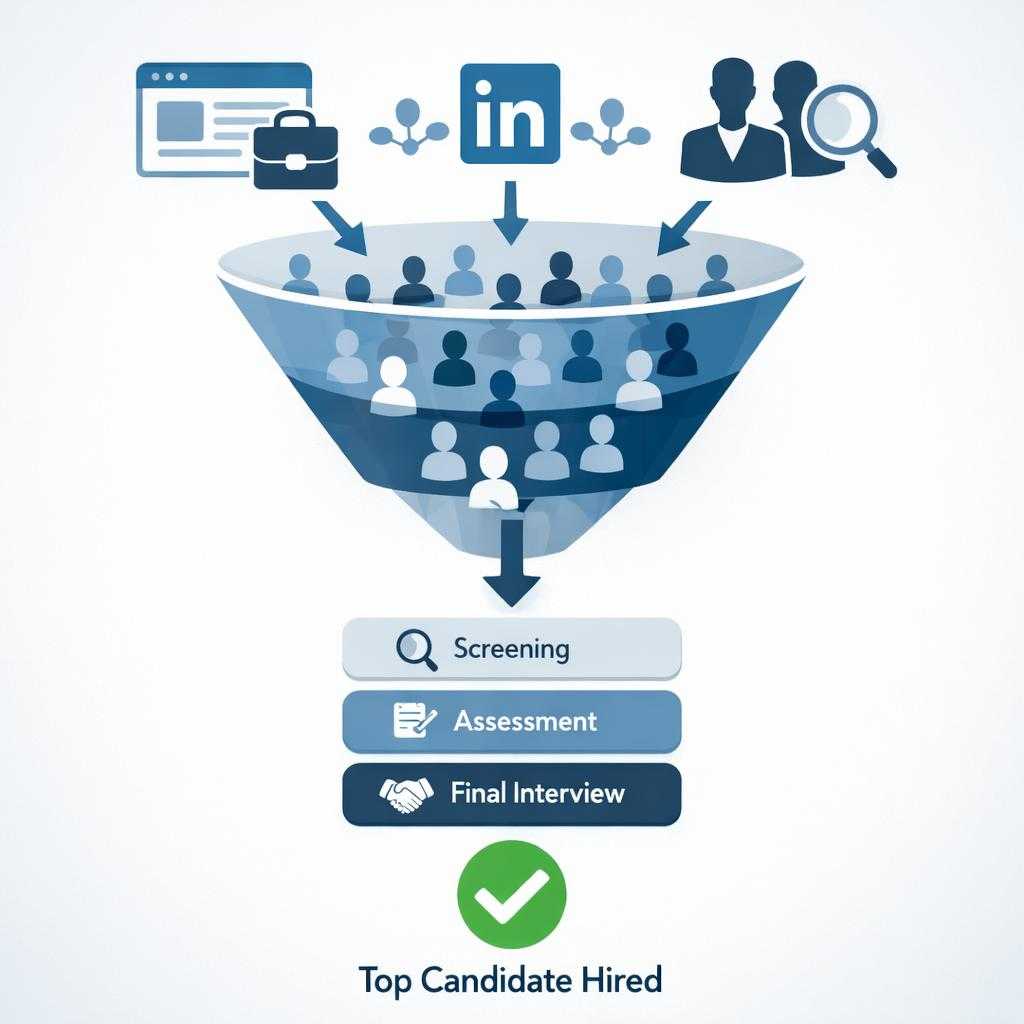
You’re asking which channels to use to find candidates. You use all of them, weighted by role and urgency. The channel you can’t replace is direct outreach to employed engineers.
If you only post and wait, you trade speed for screening time. Job boards can fill an L1 or L2 pipeline fast, but they also dump low-fit resumes into your calendar. LinkedIn is strongest for outreach and brand visibility, while inbound stays noisy. Referrals and your network produce the highest signal, but you can’t schedule them. For most network or security roles, the hire comes from targeted outreach to people who aren’t applying, then a consistent scorecard once you find them.
| Channel | Best for | Tradeoff | When to weight it more |
|---|---|---|---|
| Job boards | Fast pipeline volume for L1 and L2 roles | High noise and 15-minute phone screens | When qualified applicants are actively applying |
| Visibility and outbound outreach | Inbound can still be messy | When you need both brand presence and targeted outreach | |
| Referrals and your network | Highest signal candidates | Low volume, not schedulable | When quality matters more than speed |
| Direct outreach to employed engineers | Reaching strong candidates who are not applying | Requires consistent outbound time | For network, cloud, and security roles where inbound misses the market |
For MSP owners, a repeatable recruiting system beats one-off posting because it keeps pipeline quality predictable. Our guide to MSP recruiting shows how to build one.
Channel Mix for MSP Recruiting and Technical Hires
The channel question is really a time question. Fill every role from inbound and you’ll drown in volume while still missing the people who are already employed and good at the job. Weight your mix by two things:
-
How many qualified people are actively applying
-
How costly a bad hire is to your client experience
If you need an L2 to stabilize ticket queues, job boards or LinkedIn inbound can build a shortlist quickly. Then move fast through structured evaluation. If you need a security engineer to own escalations and client trust, shift your time to direct outreach and referrals, because the best candidates aren’t applying. If this person misses a firewall change window or mishandles an incident, do you lose one client or three?
When a bad technical hire is expensive, track pass-through rates by stage to see which channel produces hires instead of interviews. Our guide to essential hiring metrics covers what to measure.
What Happens After You Find Candidates
Finding names is the easy half. The week disappears into back-and-forth scheduling and shallow screens, and sourcing starts feeling expensive even when the applicants were free.
Sourcing is only step one. Every channel funnels into the same bottleneck, your time to screen and schedule. If a job board dump forces 25 screens to get three viable L2s, the savings moved into your calendar and your service manager’s week.
Run one consistent pipeline so you can compare channels by pass-through rates instead of gut feel. The FACT Driven Hiring System evaluates integrity first, then attitude, then cognitive ability, then personality. Referrals and inbound applicants get the same screen and the same scorecard.
A structured scorecard works best when you define the few traits you won’t compromise on for customer-facing roles. Our guide to soft skills and leadership traits in candidates lists good ones.
If you’d rather buy the whole channel mix than run it yourself, fractional recruiting covers unlimited sourcing and screening across every open role for a flat fee. That fee is $1,500 a month on a six-month commitment, or $2,500 month to month. Ad spend is typically $0; when a role needs it, about $300 a month at most.
If fractional looks right on paper and you want to test it against your own hiring plan, schedule a 30-minute call with Discovered and we’ll run the numbers with you.