
If the last three placements felt “fine” and you’ve heard “at least talk to this one” more times than you can count, contingency isn’t fitting anymore.
The cause isn’t necessarily a bad recruiter, or a sudden shift in candidate behavior. More often, it’s a stage mismatch: contingency works for one-off, winner-take-all placements, but it struggles once you need consistent hiring throughput. In this article, you’ll get five concrete signs of outgrown contingency recruiting, plus a clear way to think about fractional recruiting, RPO, or an internal recruiter without derailing your interview loops and offer approvals.
Why Contingency Drift Sneaks Up on You
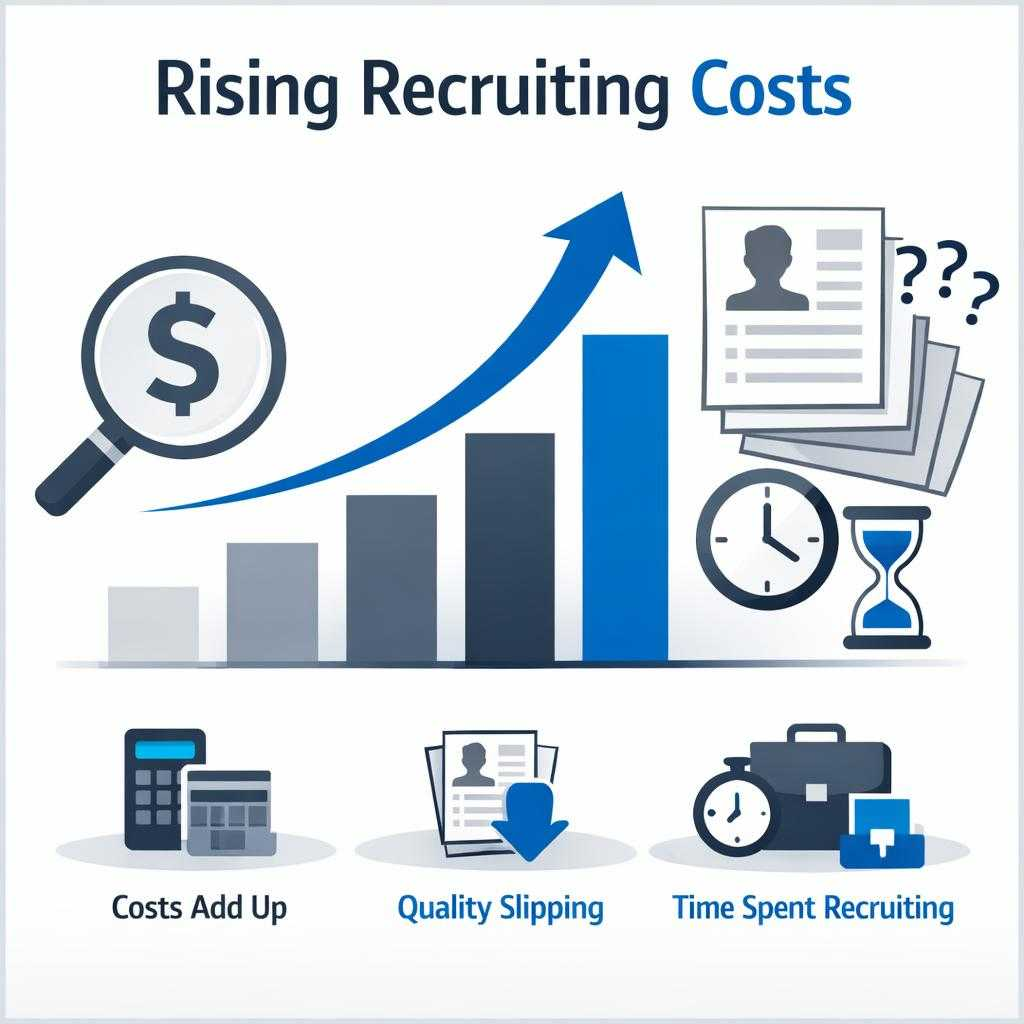
| Sign | What it looks like in practice | Simple thing to track |
|---|---|---|
| Annual contingency spend crossed six figures | Fees add up across repeat hiring, even when searches feel like “just one more placement.” | Trailing 12-month fees (total $) |
| Candidate quality sliding from “great” to “fine” | Recent resume slates feel plausible but you feel you are settling versus earlier wins. | % of submitted candidates who reach onsite |
| You are spending 5 to 10 hours every week recruiting yourself | You source, screen, and sell the role because the pipeline isn’t self-sustaining. | Your weekly hours spent on LinkedIn sourcing, phone screens, and interview scheduling |
| Recruiter keeps pushing borderline candidates | “At least talk to this one” on candidates missing clear must-haves. | Top repeat rejection reasons at screen stage |
| You are afraid to fill a second role with the same recruiter | You delay openings or try to self-fill to avoid another full fee. | Open roles delayed due to fee concerns (count) |
Contingency is the default for most companies, and that is exactly why it can stay in place long after it stops fitting. It’s the structure most U.S. external recruiting runs on.
Contingency recruiting usually feels great early because each hire is a one-off win and the fee feels occasional. As you start hiring repeatedly, the same fee model scales linearly (often 15% to 25% of first-year base), but the recruiter’s incentive stays tied to closing, not to building a repeatable pipeline for your business.
It’s tempting to think your recruiter “fell off,” but the slide isn’t personal. It’s how the model works. More reqs mean more intake calls and back-and-forth, plus more pressure to move borderline candidates through. What changed isn’t their effort, it’s the cost of misalignment showing up every time you hire.
The 5 Signs (and when to stop using contingency recruiters)
When contingency works, the relationship is easy on both sides. You send a clear spec, you get a small number of well-calibrated candidates, and you only spend real time when someone is legitimately close. When you’ve outgrown it, everything reverses. You’re doing more of the work and questioning hires you would’ve been excited about a year ago.
Your Annual Contingency Spend Crossed Six Figures
When the fee stops driving the decision, you can open the role you actually need to fill instead of the one you can afford to fill. Recruiting becomes a budget line you plan around. It’s no longer a surprise bill that hits whenever someone signs.
Five hires at a $20K to $25K fee each is $100K to $125K in contingency recruiting fees, and that’s not an edge case for a 30 to 150 person company. At typical 15% to 25% placement fees, you can hit that number with a handful of mid-level roles, even when the sourcing motion is basically the same every time.
Per-hire fees feel small when you pay them. You think “we had to pay a fee again,” not “we just spent six figures on recruiting this year.” Once you’re consistently over $100K, you’re effectively paying for an ongoing recruiting function instead of one-off help. That’s the moment to compare models based on total annual cost and total filled seats, not the percentage on each offer.
Candidate Quality Is Sliding From “Great” to “Fine”
Early on, you probably got 2 or 3 placements that made you say, “We should’ve done this sooner.” Then the candidates got weaker. The next batch looks plausible on paper, interviews okay, and still leaves you with a nagging feeling that you’re settling.
That’s the incentive problem. Your recruiter gets paid when a candidate signs, not when the next one is also a good fit. So your first PM hire is great. The next two “PM” resumes turn out to be coordinators who’ve never managed a schedule.
Tracking how many candidates make it to onsite interviews, and how many offers get accepted, tells you whether the issue is who’s being found or how they’re being managed through your process. Read more in our article: 9 Essential Metrics To Track Hiring Success Retention. You can hire “fine” people for one quarter and not notice. Then you spend the next two quarters covering the work they didn’t do.
You’re Spending Hours Every Week Recruiting Yourself
If you’re writing the job post, chasing referrals, screening inbound, sourcing on LinkedIn, and pushing interview feedback through, you’re already the recruiter. The agency isn’t your hiring engine. It’s one channel, often not the best one.
Take an MSP owner explaining on-call rotation, escalation paths, and tech stack to candidates. That isn’t “helping” the recruiter. That IS the recruiting work. You’re selling the role and setting the bar. As Fletcher Wimbush puts it, “HR people are not recruiters. Making a compliance admin focused HR person do recruiting is like making an accountant do sales.” When your HR generalist or ops lead is keeping contingency running by doing the recruiter’s job, the model has stopped fitting your stage.
In MSP hiring, clarifying on-call expectations, escalation paths, and tech stack early is often the difference between a smooth close and late-stage candidate drop-off. Read more in our article: Msp Recruiting
The Recruiter Keeps Pushing Borderline Candidates
You know how it sounds. “I think you should at least talk to this one.” The candidate isn’t terrible. They just miss one of your non-negotiables, and you can hear the recruiter trying to keep things moving toward a fee.
This is where you should test your own process. When the recruiter pushes you to drop your standards, that’s the fee pressure showing. Measure how many submitted candidates fail the same screen. When the same rejection reasons keep coming up (no relevant industry, won’t travel, comp expectations $30K over band), you’re looking at low-signal volume.
You’re Afraid to Fill a Second Open Role With the Same Recruiter
When you hesitate to open another req because it means another full fee, contingency has stopped working for you. You start managing around the pricing model. You delay the backfill, stretch a supervisor across two crews, or tell yourself you’ll “just hire the next one ourselves.”
That fear is a diagnostic all by itself because it changes behavior.
Flat-fee and monthly models can reduce the “another full fee” hesitation by separating recruiting cost from each individual offer letter. Read more in our article: Flat Fee Recruiting.
You either stop hiring when you need to hire, or hire whoever costs least up front instead of who fits best. Contingency can’t be your default when you need to fill multiple seats at once. The fees stack and the coordination work piles up at the same time, right when you need hiring to move fastest.
What the Five Signs Mean
A COO compares notes after a messy quarter and realizes the same two agencies sent the same candidate twice, each claiming they found him first. Nobody wants to fight over the contract details, but the team still loses hours sorting it out.
Taken together, the five signs aren’t five separate problems. They’re one issue coming up in different places. Contingency recruiting is priced and incentivized for occasional, winner-take-all placements rather than repeatable throughput. Once you’re filling multiple seats a year, the model naturally drifts toward closing behavior. That’s why the pressure to “at least talk to” borderline candidates shows up at the same time your spend crosses six figures and your definition of a slate where 2 or 3 candidates reach onsite gets softer.
The second structural cost is duplication. Contingency is typically non-exclusive and competitive, which means multiple vendors run parallel searches and submit overlapping profiles. As an example, you might see the same superintendent come through two agencies a month apart, both claiming ownership, while your project manager and ops lead burn time untangling who introduced whom and whether an “introduction” clause applies. That isn’t a recruiter quality issue. It’s the engagement structure creating extra work that compounds as req volume rises.
Finally, fees don’t speed things up when the slowdown is on your end. The hold-up is in your phone screens, your onsite interviews, or how long you take to make an offer. Slow feedback, dragged-out interview loops, and stalled offers all live on your side, not the recruiter’s. Contingency can’t fix that, and you still pay full price when the hire finally lands. Look at two numbers. How many submitted candidates fail for the same reason you already told the recruiter, and how many days candidates wait on you between steps. If those numbers climb, you aren’t really being helped by recruiters. You’re managing low-quality applications when your hiring process needs proper attention.
Choose What to Switch to Next
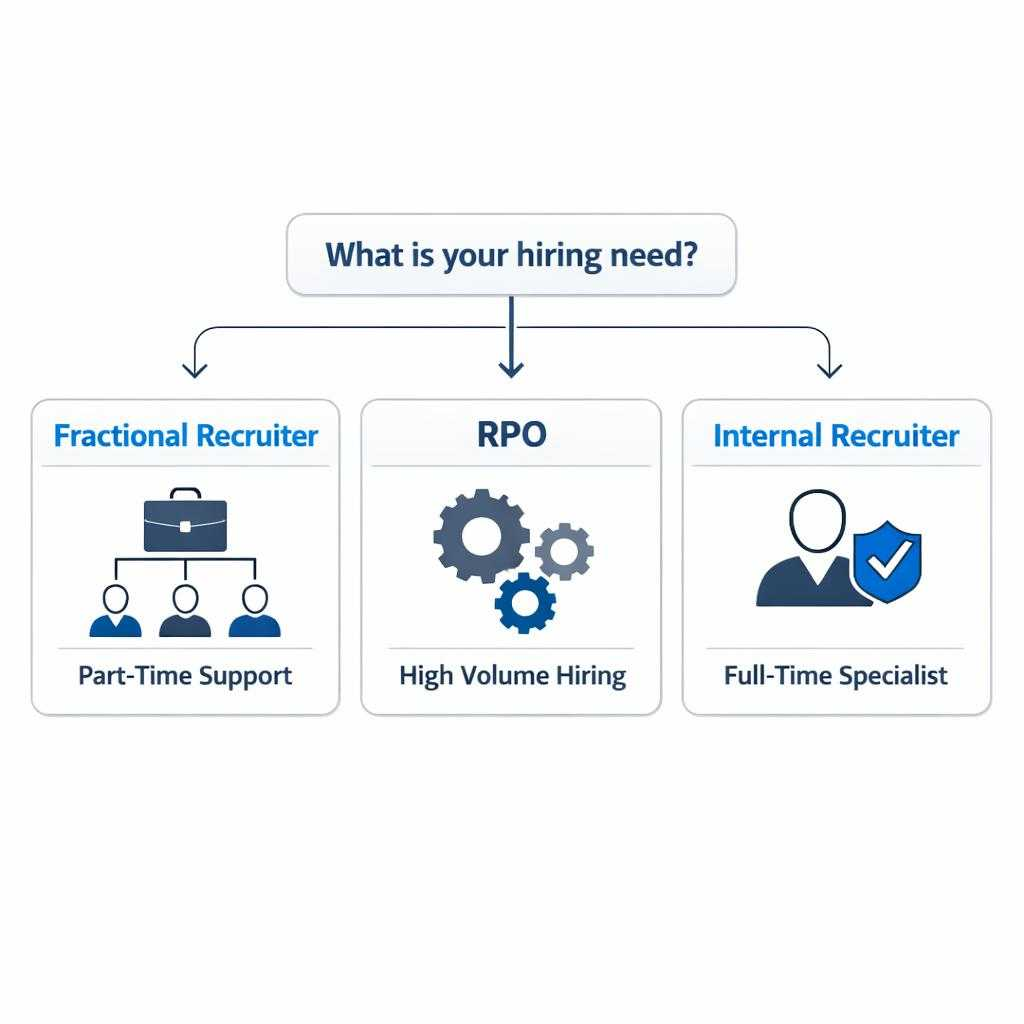
Look at the alternatives the same way. Ask how many seats you need filled per quarter, and how much control over intake meetings, comp bands, and interview loops you want.
If you need steady throughput across account managers, project managers, and service desk techs (say, 1–4 hires/month across ops, sales, and field), you usually want fractional recruiting so you can build a consistent system without carrying a full-time headcount (see Fractional Recruiting Cost in 2026). If you’re hiring at high volume with standardized roles and SLAs, you want recruitment process outsourcing (RPO). If hiring is constant, your roles are specialized, and you want full internal ownership, hire an internal recruiter. The “cheapest per fee” option often costs you the most in control over intake meetings, comp bands, and interview loops.
How To Switch Without Stalling Your Hiring
Switching mid-search creates a mess. Candidates end up with different comp numbers and timelines depending on which recruiter answered first. That confusion costs you the exact people you were trying to hire faster.
Don’t rip and replace while you still have open seats. Keep the current recruiter on any role that’s already in late-stage interviews, but stop opening new reqs into the old model. Instead, pick 1–2 roles you’ll run through the new approach first, and freeze your intake to one owner so candidates aren’t getting mixed messages.
Before you change anything else, measure three basics for the last 30 days, then weekly: qualified screens per role and days from screen to offer. If those numbers don’t improve, the 5-day lag on interview feedback is your screen, onsite, and offer process, not your two contingency agencies and your internal sourcing.
How to Keep Contingency in the Mix
Contingency still makes sense when you use it like a niche agency for a hard-to-fill superintendent req, not your ATS workflow and weekly hiring meeting cadence. Keep it for truly one-off roles and niche searches where you need fast market access.
If you need repeatable throughput, contingency can’t be the default. Cap it to a small number of searches per year, require tight calibration (must-haves in writing), and stop paying for volume you could source, screen, and run yourself with a consistent process.
FAQ
Is Contingency Recruiting Bad?
No. It’s a common default because it works when hiring is occasional and you mainly need extra reach, fast. The problem shows up when repeat hiring turns contingency into your core system, because the economics and incentives don’t reward building reusable leverage.
Should I Fire My Contingency Recruiter?
Not automatically. If they’re performing, keep them on roles already in motion and make a clean decision about which new roles you’ll stop opening into contingency. Treat it like changing vendors or tooling, not like ending a relationship.
What If I’m Not Sure I’ve Outgrown It Yet?
Run a simple 90-day test: add up trailing 12-month fees, track your submitted-to-interview pass-through rate, and log how many hours per week you’re personally spending to keep hiring moving. If spend is drifting toward six figures, pass-through stays weak, and your time keeps rising, you don’t have a “recruiter problem,” you have a model fit problem.
Can I Use Contingency and Fractional at the Same Time?
Yes, if you set boundaries so you don’t pay twice for the same work. Use fractional to own intake, calibration, process, and core pipelines, and reserve contingency for truly niche or urgent one-off searches where paying a fee buys you speed or access.
Related reading: Fractional Recruiting vs Contingency · Time to Hire with Fractional Recruiting · Fractional Recruiting Cost in 2026
If three or more of the five signs sound like your situation, schedule a 30-minute call with Discovered. We’ll run your last 12 months of hiring against the fractional model and show you what the next 12 would look like.